SEO audit service: every problem on your site, ranked by what it costs you
Every problem on your site, ranked by impact, at a fixed price.
- Fix list ranked by impact and effort
- Walkthrough call included
What the SEO audit covers
Backlinks are reviewed too: the real referring domains behind your authority score, the toxic ones to disavow, and the gap to the pages that outrank you.
-
Crawl and indexing
A full crawl of the site compared with what Google has indexed: orphan pages, redirect chains, duplicate URLs, noindex mistakes, canonical errors, sitemap and robots.txt problems, pages Google discovered but never indexed and why.
-
Core Web Vitals and speed
Largest Contentful Paint, Interaction to Next Paint and Cumulative Layout Shift from real-user data, template by template, with the specific assets and scripts behind each failing score.
-
Internal linking
Which pages carry the authority, which money pages get none, link depth from the home page, anchor text patterns, and the links to add or remove, page by page.
-
Content gaps and cannibalisation
Keywords your competitors rank for and you do not, and the opposite problem: two or more of your pages fighting over the same query, with the page to keep and the one to merge or redirect.
-
AI-crawler access
Whether GPTBot, OAI-SearchBot, PerplexityBot, ClaudeBot and Google-Extended can fetch your pages. A CDN or firewall default often blocks them silently, which means no AI assistant can cite you. We test it, not just read robots.txt.
-
Google Analytics and Search Console read
Where your clicks come from, which pages lost traffic and when, and what your analytics already shows about AI referrals, so the fix list starts from your numbers, not generic benchmarks.
Every check we run, published
Agencies advertise “300 factors” and “140+ checks” without ever saying what they are. Here is the actual list, so you can compare it with anyone else’s quote before you buy. A technical SEO audit is the first four groups; the full audit is all six.
1. Crawl and architecture
Full crawl against your sitemap and your live URLs: orphan pages with no internal link pointing at them, click depth from the home page, redirect chains and loops, soft 404s, broken internal and outbound links, parameter and faceted URLs multiplying your page count, pagination handling, and duplicate URLs created by trailing slashes, uppercase, www and protocol variants.
2. Indexing and crawl budget
What Google has actually indexed versus what you published, read from Search Console rather than guessed: pages excluded and why, noindex and canonical conflicts, robots.txt rules blocking things you want crawled, index bloat from thin or generated URLs, sitemap accuracy, and the Crawl stats report — how often Google comes, what it spends its time on, and the response codes and timings it meets when it does.
3. Rendering and Core Web Vitals
Whether your content exists without JavaScript, what a crawler sees after rendering, and Largest Contentful Paint, Interaction to Next Paint and Cumulative Layout Shift from field data where you have enough traffic for it, lab data where you do not. Measured per template, because one slow template usually explains a whole section.
4. AI and search-engine access
Fetch tests for the crawlers that feed AI answers — GPTBot and OAI-SearchBot, ClaudeBot and Claude-SearchBot, PerplexityBot and Google-Extended — plus whether your robots.txt, CDN or firewall is quietly blocking them, whether your pages are extractable as clean answers, and which of your pages assistants already cite.
5. On-page and content
Titles, headings and metadata against the queries each page actually serves; thin and duplicate pages; cannibalisation, where two of your own pages compete for one query and both lose; keyword gaps against the sites ranking above you; structured data validity; and internal linking — which pages hold authority, and whether any of it reaches the pages that make you money.
6. Off-page and risk
Backlink profile and anchor patterns, lost links worth reclaiming, and a check of the Manual actions report, because a site with an unresolved manual action needs penalty work, not an audit.
Methods, costs, comparisonsRead the full guide
What an SEO audit costs
Almost nobody in this market publishes a number, so here is the range from the agencies that do. A small site, under about fifty pages, is quoted from roughly $500 to $1,500. A mid-sized site runs from about $2,500 to $8,000, and the published starting price at the larger agencies sits near $8,600. Enterprise reviews — multilingual, multi-market, with a workshop — are quoted from $10,000 and have been published as high as $25,000. Turnaround at that end is commonly quoted at 45 days, and sometimes two to four months.
The spread comes down to one thing: how much of the work is a person reading your specific site, and how much is a script reading any site. A free tool scores a page in sixty seconds. It cannot tell you that your canonical tags are costing you a thousand product pages.
Ours is a fixed price per site, quoted in writing before you pay, with the delivery date in the same quote. The price does not move with what we find, and the audit does not become a retainer you have to buy to get the findings explained.
If the question is narrower: to be found month after month in Google and in AI answers, that is what our SEO, AEO and GEO packages do, from €480 a month. A page about you that you want gone is reputation work instead.
What this audit will not do
Worth saying plainly, because it decides whether you should buy one at all.
- It will not fix anything by itself. It is a diagnosis and a ranked plan. Someone then has to ship the changes — your developers, your writers, or us.
- It will not create demand that does not exist. If nobody searches for what you sell, the audit will say so rather than sell you a content plan.
- It will not replace links. If your pages are sound and the sites above you simply have far more authority, the honest finding is that you need links, not a technical project.
- It will not lift a manual action. That is a different job with a different process, and we check for one before we start.
- It is not worth buying twice a year on a healthy site. Once, then again after a replatform, a migration or a drop you cannot explain.
Case studies
-

 Subminimal
-

 Chez Switch
-

 Honeydew Sleep
-

 Smartico
-

 Origine CBD
-
 Nuvei
-

 Mademoiselle Culotte
-

 Kia Motors


Methods, costs, comparisonsRead the full guide
What you receive
- The fix list. One table, every problem ranked by impact and effort, with its owner, its evidence and the pages it affects. Top of the list is what we expect to help rankings most, for the least work.
- The data. The crawl export, the index comparison, the speed readings and the keyword gap, as files you keep.
- A written summary in plain words, one page, for whoever signs off the work.
- A walkthrough call with the consultant who ran the audit, so your developer and your writer leave knowing what to do first.
What you do not receive: a 90-page PDF of screenshots from a tool, a "score", or a pitch. If the honest finding is that your site is fine and you need links or content, the list says so and points at link building or a topical map.
What a finding looks like
Everyone promises “actionable recommendations”. This is the format every line of your fix list arrives in, shown here with an illustrative example rather than a client’s data.
- Problem — Product pages are canonicalised to their category, so Google indexes the category and drops the product.
- Affected URLs — 1,284 of them, listed in the export, grouped by template.
- Evidence — Search Console shows them as “Alternate page with proper canonical tag”; the crawl shows the canonical hard-coded in the template.
- Impact — High. These pages carry the buying queries.
- Effort — Low. One template change.
- Owner — Developer.
- What should happen — Self-referencing canonicals on product pages, then request indexing for the top 50; the rest follow on the next crawl.
Sorted so the top of the list is the most ranking gained for the least work. A developer can pick a row up and ship it without a meeting, which is the only test of an audit that matters.
Methods, costs, comparisonsRead the full guide
Timeline
How it works
-
1. Day 0 · Order and access
Pay the fixed price in your quote. Grant Viewer access to Search Console and Google Analytics (two minutes; we send the steps). Tell us your main markets and the three competitors you lose to.
-
2. Days 1 to 3 · Crawl and data
Full crawl, index comparison, speed readings on real-user data, AI-crawler fetch tests, backlink pull, keyword gap against your competitors.
-
3. From day 3 · Analysis
A consultant reads the data, finds the causes behind the symptoms and writes the fix list. Tools find symptoms; people find causes.
-
4. Delivery · Files and call
The fix list, the data and the one-page summary arrive by email and in your dashboard. The walkthrough call is booked within the following week.
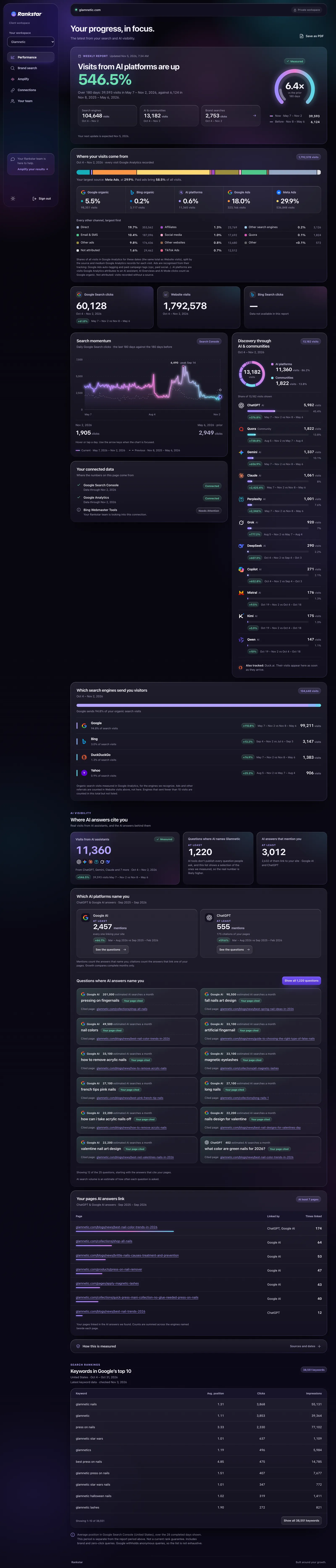
Your All-in-One Dashboard to Track SEO, AI Visibility, and More
Methods, costs, comparisonsRead the full guide
SEO audit FAQ
What does an SEO audit include?
A technical and content review of the whole site: crawl and architecture, indexing and crawl budget, rendering and Core Web Vitals, access for search engines and AI crawlers, on-page and content quality including cannibalisation, and the backlink profile. Every check we run is listed on this page, so you can compare it against any other quote.
How much does an SEO audit cost?
Ours is a fixed price per site, quoted in writing before you pay, and it does not change with what we find. Across the market, published prices run from about $500 for a small site to roughly $8,600 at the larger agencies, and above $10,000 for enterprise reviews. Free tools cost nothing and tell you a fraction of it.
What is the difference between a technical SEO audit and a full SEO audit?
A technical audit covers crawl, indexing, rendering, speed and crawler access — whether search engines and AI assistants can reach and understand your pages. A full audit adds content: what each page targets, where you are cannibalising yourself, what your competitors rank for that you do not, and whether your internal links send authority anywhere useful. Most sites that have never been audited need the full one.
How long does an SEO audit take?
The delivery date is written in your quote and counted from the day we get access to Search Console and Analytics. The crawl and data pull take the first days; the analysis is the part that takes a person. Larger agencies commonly quote 45 days, and enterprise reviews two to four months.
Is a free SEO audit worth anything?
As a smoke alarm, yes. A free checker scores a page, flags missing titles and slow loading, and costs nothing. What it cannot do is read your site: it does not know which of your pages are meant to make money, it cannot tell a deliberate noindex from an accidental one, and it will not find two of your pages competing for the same query. Run one first; if it comes back clean and your traffic is still falling, that is exactly when a real audit pays for itself.
Who performs the audit?
A consultant from our own team, in-house, who then runs the walkthrough call. Tools do the crawling and the measuring; a person reads the output, finds the cause behind the symptoms and writes the fix list. Nothing is resold to a third party.
All 10 questions
What do I get at the end?
The fix list as one table, ranked by impact and effort, with the affected URLs, the evidence, the owner and what should happen. The raw data as files you keep: crawl export, index comparison, speed readings, keyword gap. A one-page written summary for whoever signs off the work. And a walkthrough call with the consultant who ran it.
Can you fix what you find?
Yes, and you are under no obligation. Most clients take the list to their own developers and writers. If you want it done for you, it becomes a monthly plan or a one-off project quoted from the same list — priced per the fixes, not as a mystery retainer.
How often should a site be audited?
Once, properly, then again when something changes: a replatform, a migration, a redesign, or a traffic drop you cannot explain. A healthy site does not need a new audit every quarter, whatever the industry sells.
Do you audit large or multi-language sites, or audit for other agencies?
Yes to all three. Large sites get sampled by template rather than crawled page by page, multi-language sites add hreflang and market-by-market indexing, and agencies buy the audit white label, delivered unbranded for their own client.