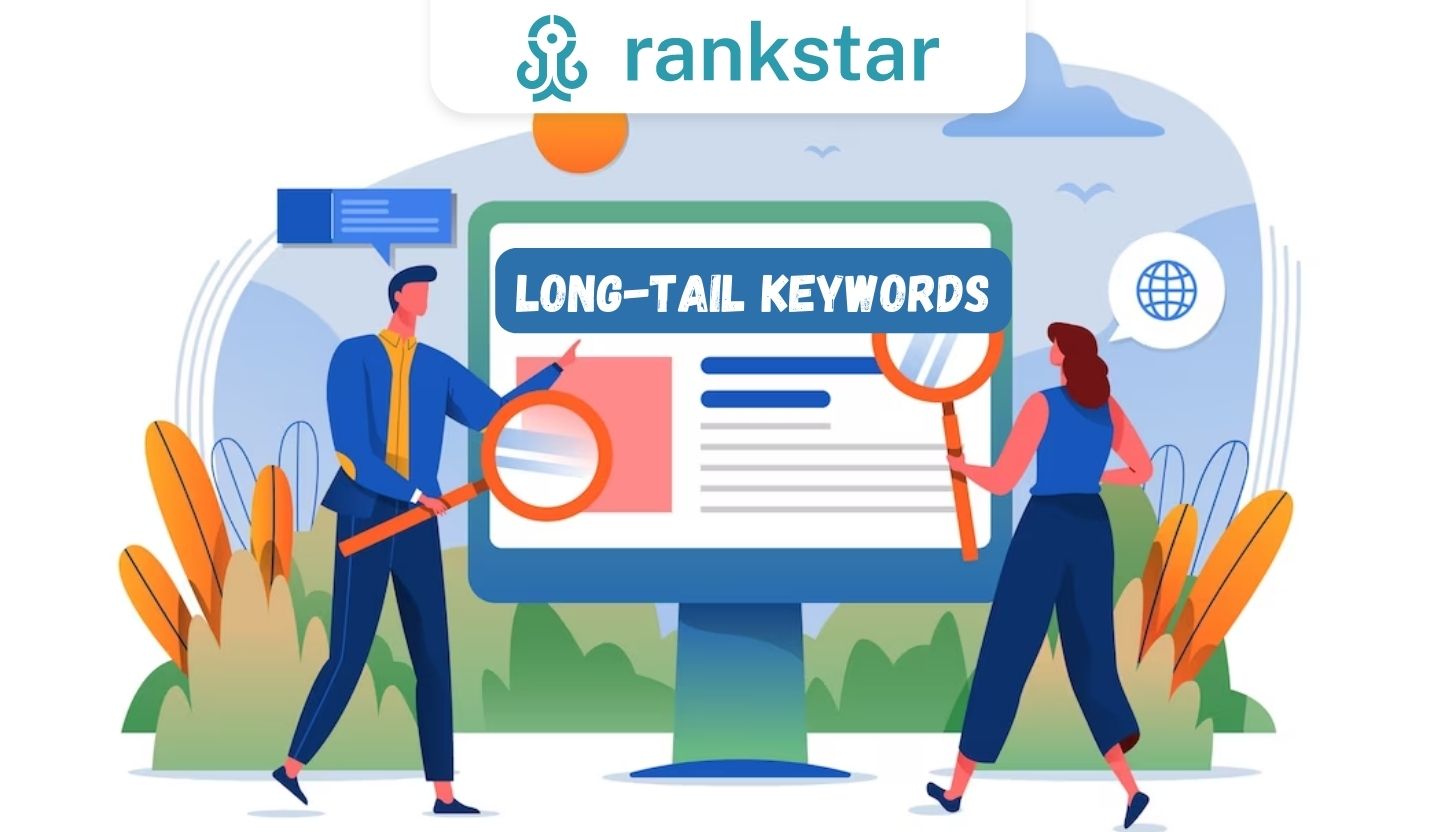







You’re striving to boost your website’s visibility, but popular keywords aren’t cutting it. It’s time to embrace long-tail keywords, your secret SEO weapon.
They’re specific, easier to rank, and attract targeted traffic. This guide will show you how to identify and use these valuable phrases, place them strategically, and optimize your site, unlocking your SEO potential.
Let’s dive into the world of long-tail keywords and supercharge your website’s performance.
Key Takeaways
- Long-tail keywords are easier to rank for due to lower competition.
- Long-tail keywords attract more targeted traffic.
- Long-tail keywords are less expensive for PPC advertising.
- Long-tail keywords simplify content targeting and provide more choice for content creation.
Rankstar – A Valuable SEO Partner for Your Business
→ Unleash the potential of long-tail keywords and revolutionize your SEO strategy.
Dive into the world of targeted search optimization on Rankstar. Explore the strategies and techniques to boost your rankings. Ready to dominate the search results? Discover the power of long-tail keywords with us.
We are also here to propel your brand to the summit of search rankings, ensuring its outstanding prominence in both Autocomplete Suggestions and Autosuggest Removal when in need.

Benefits of Long-Tail Keywords
The benefits of using long-tail keywords in your SEO strategy are numerous and can significantly boost your online visibility. They’re easier to rank for since they’re less competitive. This means your content has a better chance of landing on the first page of search engine results.
You’ll also garner more targeted traffic since these keywords are typically more specific. This specificity attracts users who are closer to making a purchase, increasing your conversion rates.
Moreover, long-tail keywords make targeting with relevant pages simpler. They’re also less expensive for pay-per-click (PPC) advertising due to fewer bids.
Lastly, there’s more choice, providing a broader scope for content creation. So, if you’re struggling to rank for target terms, consider the power of long-tail keywords.
Ranking and Traffic With Long-Tails
When you’re looking to improve your site’s rankings and increase traffic, long-tail keywords can be a game-changer. They’re less competitive than short, popular keywords, making it easier for your site to rank highly in search results. Moreover, they draw in targeted traffic, as these keywords are more specific and are often used by users who are closer to making a purchase.
| Advantages | Examples | Impact |
|---|---|---|
| Lower ranking difficulty | “Vintage leather boots” vs “Boots” | Higher chance of ranking, less competition |
| More targeted traffic | “Organic baby food recipes” | Attracts audience closer to purchasing |
| Less expensive PPC | Long-tail keywords have lower cost-per-click | Cost-effective advertising |
| Improved content targeting | Use long-tails in headers, titles | More relevant content, better user experience |
Identifying Long-Tail Keywords
Now, let’s dive into how you can identify these beneficial long-tail keywords for your SEO strategy.
Start with a tool like Keyword Magic or Semrush’s Keyword Overview. These platforms help you spot long-tail opportunities by analyzing search volume and keyword difficulty.
Next, perform a keyword gap analysis. It’ll highlight terms your competitors rank for but you don’t, revealing potential long-tails.
Google search features can also be a goldmine. Autocomplete suggestions and the ‘People also ask’ section often contain long-tails.
You must remember, identifying the perfect long-tail keywords isn’t just about finding less competitive phrases. It’s about understanding user intent, ensuring the keywords you target align with the content you’re providing.
This strategic approach will truly unlock your SEO success.
Tools for Long-Tail Keyword Discovery
Continuing from our previous discussion, let’s delve into the specific tools you can use to uncover profitable long-tail keywords.
Google Keyword Planner is a solid start, offering detailed data on search volumes and competition levels.
For an in-depth analysis, consider SEMrush’s Keyword Magic Tool. It delivers long-tail suggestions and data on search volume, keyword difficulty, and cost-per-click.
Ahrefs can be your go-to for keyword gap analysis, identifying what your competitors rank for but you don’t.
Don’t overlook Google’s auto-suggest and related searches features, they’re rich sources of long-tail keywords.
Lastly, Answer The Public visualizes search queries as questions, prepositions, and comparisons, giving you a broader view of long-tail keyword potential.
Effective Usage of Long-Tail Keywords
While you’ve harnessed the power of tools to discover long-tail keywords, it’s vital you understand how to effectively use them in your SEO strategy. Here’s how you can do this:
- Identify user intent: Understand what searchers are looking for when they use these specific keywords.
- Craft relevant content: Your content should align with the user’s intent and incorporate long-tail keywords naturally.
- Strategically place keywords: Include them in title tags, headers, and throughout the content, but avoid keyword stuffing.
- Create topic clusters: Organize your content into interconnected clusters to enhance your SEO.
Strategic Placement of Keywords
In your quest to unlock SEO success, it’s crucial to understand that the strategic placement of long-tail keywords plays a significant role. Don’t merely scatter your chosen keywords throughout your content. Instead, position them where they’ll have the most impact.
Your title and headings are prime spots, as they help search engines understand your content’s theme. Additionally, include long-tail keywords in the first 100 words of your content. This doesn’t just appease search engine algorithms, but also provides clarity for your readers.
Lastly, consider your meta descriptions and URLs. Although they mightn’t directly influence your ranking, they can improve click-through rates. Remember, strategic placement isn’t about keyword stuffing. It’s about creating relevant, valuable content that seamlessly integrates your long-tail keywords.
Topic Clusters and Content Organization
Building on your understanding of strategic keyword placement, you’ll find that organizing your content into topic clusters can further enhance your SEO success with long-tail keywords.
Topic clusters involve creating a pillar page, which is a comprehensive overview of a general topic. Then, you link in-depth, related content pieces, or ‘cluster content’, back to the pillar page.
This organization provides several benefits:
- It helps search engines understand your content structure better.
- It boosts the visibility of your cluster content.
- It increases the authority of your pillar page.
- It enhances user experience, by providing related, in-depth information.
Optimization Strategies With Long-Tails
Now that you’ve got a grip on organizing your content into topic clusters and using long-tail keywords strategically, let’s delve into how you can optimize these keywords to boost your SEO rankings even further.
Start by researching and identifying the most relevant long-tail keywords for your content. Use tools like Google’s Keyword Planner or SEMrush’s Keyword Magic Tool to get insights into search volume and keyword difficulty.
Then, incorporate these keywords into your content naturally and strategically. Place them in your titles, headers, and first paragraphs where they’ll have the most impact.
Remember, though, to keep your content user-focused. It’s not about stuffing keywords, but about creating valuable content that answers users’ queries.
With this approach, you’ll see your website climb the search engine rankings.
Frequently Asked Questions
What Are the Common Mistakes to Avoid When Using Long-Tail Keywords in SEO Strategy?
You’re prone to errors when using long-tail keywords in SEO, like not considering search intent, failing to place keywords strategically, or neglecting to create content relevant to these keywords. Avoid these pitfalls for success.
How Can Long-Tail Keywords Enhance the Performance of PPC Campaigns?
Long-tail keywords can boost your PPC campaigns by targeting specific, less competitive queries. They’re cheaper to bid on and attract more conversion-ready traffic. You’ll see improved ad relevance, quality scores, and ultimately, ROI.
How Does the Implementation of Long-Tail Keywords Differ Across Various Industries?
You’ll find long-tail keyword implementation varies across industries. It’s based on customer search behaviors, industry-specific terms, and competition. It’s key to research and understand your specific industry’s long-tail keyword nuances for effective SEO strategy.
Can Long-Tail Keywords Improve Local SEO and How?
Yes, long-tail keywords can significantly improve your local SEO. They’re specific and less competitive, helping you rank higher on search results. More importantly, they attract local customers actively searching for your products or services.
How Do Long-Tail Keywords Affect User Experience on a Website?
Long-tail keywords enhance your site’s user experience by providing targeted, relevant content. They’re specific, matching user intent, so visitors find what they’re seeking quickly, reducing bounce rate and improving overall satisfaction.
Conclusion
So, ready to leverage long-tail keywords? They’re your ticket to higher rankings, targeted traffic, and cost-effective PPC campaigns.
Start identifying them using the right tools, strategically place them in your content, and optimize your site.
Remember, it’s about being specific and speaking directly to your audience’s needs.
Embrace this not-so-secret SEO weapon and watch your website performance soar.
With long-tail keywords, you’re set to unlock SEO success.


 Audit SEO
 Création de Google Autosuggests
 Campagne de référencement
 Réputation en ligne
 Netlinking
 SEO Développement Web
 CRO
CRO
 Recouvrement des pénalités