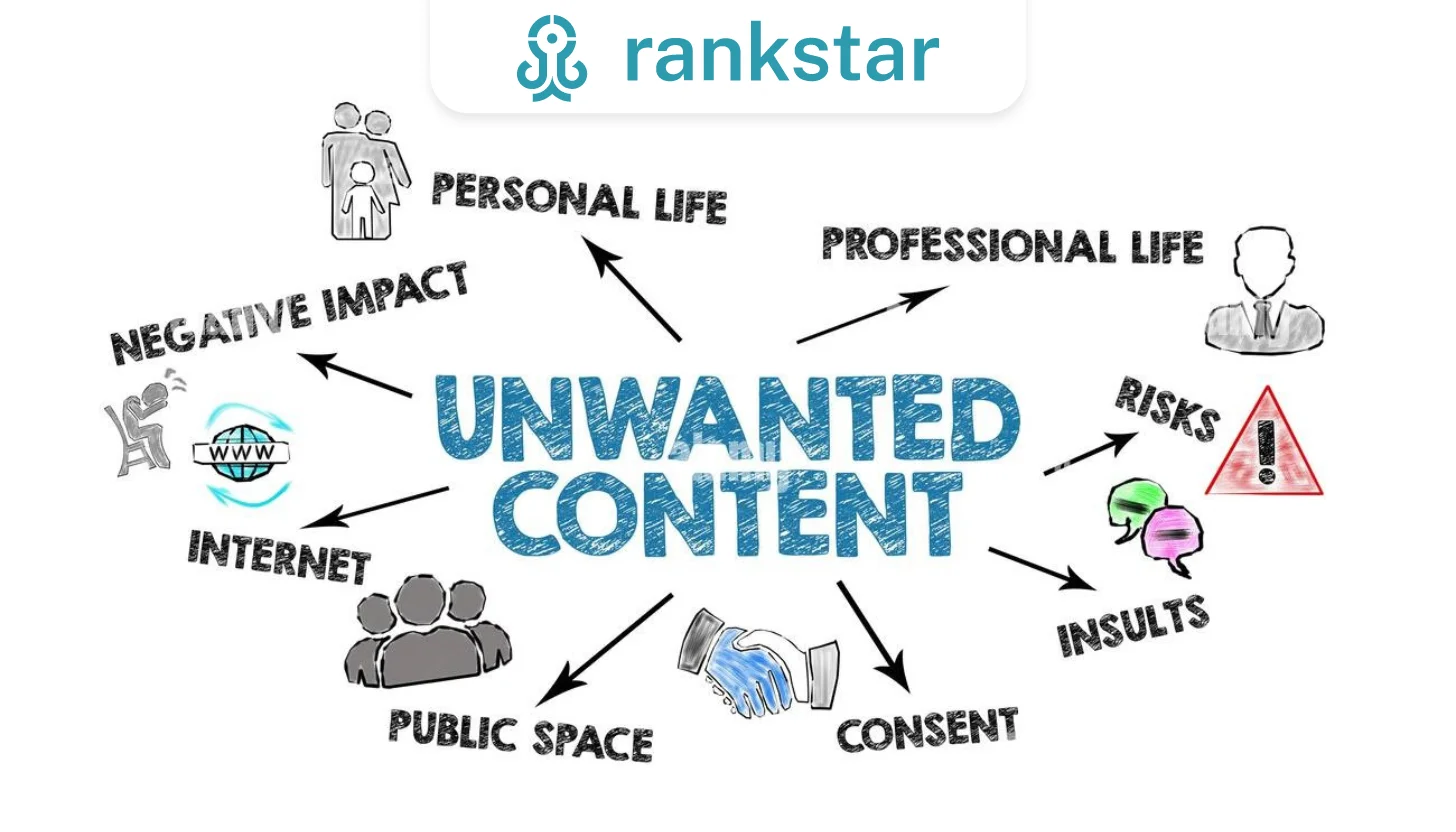







Are you fed up with unwanted content about you on Google Search? Don’t fret! This guide’s got you covered.
You’ll learn new tactics to remove this content, negotiate with authors, and even make pages invisible. If that doesn’t work, we’ll show how to bury bad content under the good.
Ready to control your online image? Let’s dive in!
Key Takeaways
- Use the “Remove Content from Google Search” feature to manage personal information and remove contact details from search results.
- Asking others to remove content may require understanding their motivations and using incentives, and phone call communication may be more effective than email.
- Tactics for removing search phrases from pages include changing the wording, requesting modifications from the publisher, or adding a NOINDEX tag to make the page invisible to search engines.
- If other methods fail, creating and promoting positive content can help push down harmful content in search results.
Rankstar – A Valuable SEO Partner for Your Business
→ Ready to take control of your online reputation?
Explore our latest article on Rankstar! Discover the cutting-edge strategies to clean up your digital footprint and ensure a positive online presence. Don’t let unwanted content hold you back—read the full article now and reclaim your online reputation!
We are also here to propel your brand to the summit of search rankings, ensuring its outstanding prominence in both Autocomplete Suggestions and Autosuggest Removal when in need.

Understanding Google’s Content Removal Policies
You’ll need to grasp Google’s content removal policies if you’re looking to manage your personal information in search results or submit a removal request form for personal or illegal information.
It’s crucial to remember that removing content from Google Search doesn’t delete it from the internet. You’ve to address the issue at its source. If the content is on a site you don’t own, reach out to the site owner. Your approach should be tailored to the author’s preferences.
If the content remains, you can make the page invisible to Google by adding a NOINDEX tag to the HTML header.
If all else fails, counteract negative content by creating and promoting positive content, which pushes the unwanted material down in search results.
How to Request Personal Information Removal From Google Search
In this section, we’re going to dive into how you can request the deletion of your personal information from a certain internet giant’s search results.
Firstly, you’ll need to use Google’s ‘Remove Outdated Content’ tool. It’s designed specifically for managing your personal info in search results. With this tool, you can submit a removal request form for personal or even illegal information. But remember, removal from Google Search doesn’t completely erase it from the internet.
If the content is hosted on someone else’s site, you might have to reach out to them directly. Understand their motivation and customize your approach. You could use Whois tools to identify site owners. However, this strategy might not work on personal blogs.
Strategies for Convincing Others to Delete Unwanted Content
To get others on board with deleting their posts that involve you, it’s crucial to understand their motivations and tailor your approach accordingly. A personalized request can be more effective than a generic plea. Consider using a phone call instead of an email to communicate your request. You’ll come across as genuine and it’s harder for them to ignore.
If they’re resistant, identify what incentives might sway them. For instance, if their content is outdated or no longer generating traffic, they may be open to removing it. Alternatively, consider asking them to modify the content or use a NOINDEX tag to make the page invisible to search engines.
If you’re dealing with a larger site, try reaching out to the webmaster or publisher directly. It’s a strategic game, but with patience and perseverance, you can get unwanted content removed.
Utilizing Whois Tools to Locate Website Owners
When you’re struggling to find the person responsible for a website, Whois tools can be your best bet for locating the owner’s contact information. These tools can provide invaluable data, including names, phone numbers, and email addresses linked to the domain. However, not all owners are easy to find. Some use domain privacy services to shield their information, making your task trickier.
Don’t be discouraged. In such cases, you can contact the privacy service directly, as they often have the authority to forward your message to the domain owner. Remember, persistence is key in this strategy. Keep your tone professional and your request clear.
With persistence and the right approach, you can use Whois tools strategically to reach out to website owners and address your content concerns.
Techniques for Removing Search Phrases From Web Pages
You’ve got several strategies at your disposal for making specific search phrases disappear from web pages.
First, alter the words on the page. By eliminating mentions of the search phrase, you decrease the chance of it appearing in search results.
You can also request the publisher to modify the headline or description to exclude the search phrase. This method is particularly effective when the article isn’t generating traffic or income for the publisher. However, be prepared that some editors may require compensation for these changes.
Lastly, add a NOINDEX tag to the HTML header on the page. This makes the article invisible to search engines, effectively dropping it from search results.
With these techniques, you can effectively manage your online presence.
The Power of the NOINDEX Tag in Making Pages Invisible
Now, let’s dive into the magic of the NOINDEX tag. This powerful tool is your secret weapon in making pages invisible to Google. Imagine the relief of knowing you can control what appears on search engines.
You can add this tag to the header of the HTML on the page, and just like that, search engines will ignore it.
Here’s how it works:
- Add a NOINDEX tag to your page’s HTML header. This essentially tells search engines to turn a blind eye.
- It’s a quick fix that webmasters can easily implement.
- Remember to place it inside the HEAD code in the HTML for it to work correctly.
- Not only Google, but other search engines like Bing also respect this tag and will drop the page from their results.
Proactive Steps to Suppress Negative Content
Even if everything else fails, there’s still a chance for you to suppress that negative content by creating positive content that’ll push the harmful stuff down in search results. This tactic isn’t about erasing the bad, it’s about promoting the good.
Focus on creating high-quality, relevant content that search engines will prioritize.
Don’t just stop at one piece of good content, keep it going. You’ll need a steady stream of positive content to effectively push the negative content down.
Use various platforms for this – blogs, press releases, social media, and your own website. Remember to optimize your content for search engines.
You’ll be surprised at how well-crafted, well-promoted content can rise above the negative stuff in search results.
Stay proactive, keep strategizing, and you’ll see the shift in your digital footprint.
The Importance of Promoting Positive Content in Google Search
Promoting positive content in search results is a powerful tool in your arsenal for managing your online reputation. It’s not just about suppressing the negative, but actively pushing the good to the fore. It’s a strategic move that can pay dividends by shaping how you’re perceived online.
Consider this:
- Creating engaging, relevant content:
- Write blog posts that highlight your expertise.
- Share success stories or testimonials.
- Publish informative articles on industry trends.
- Promoting your content effectively:
- Use SEO techniques to improve your content’s visibility.
- Share your content on social media platforms.
- Collaborate with influencers to reach a wider audience.
Effective Ways to Create and Promote Better Content
You’ve got a wealth of methods at your disposal to create and boost superior content, enhancing your online presence and reputation. Start by understanding your audience. You need to know what they’re interested in, their pain points, and their preferences.
Next, focus on creating high-quality, engaging content. No matter what form your content takes – blog posts, videos, podcasts – make sure it provides value to your audience.
Then, use SEO techniques to help your content reach a wider audience. Keywords, meta descriptions, and backlinks all play a role here.
Finally, promote your content. Use social media, email newsletters, and partnerships to get your content in front of more eyes.
| Methods | Description |
|---|---|
| Understand your audience | Identify their interests, pain points, and preferences |
| Create high-quality content | Ensure it provides value and engages your audience |
| Utilize SEO techniques | Use keywords, meta descriptions, and backlinks |
| Promote your content | Use social media, email newsletters, and partnerships |
Monitoring and Maintaining Your Online Reputation After Content Removal
Now that you’ve successfully maneuvered the removal of unwanted content from Google search, your journey isn’t over yet. It’s crucial to monitor and maintain your online reputation.
Here’s a strategic plan to stay on top of your internet image:
- Regularly Google yourself
- Stay aware of what appears on the first page
- Analyze the sentiment of the content
Set up Google Alerts
- Receive notifications for any new content associated with your name
- Act swiftly if and when undesirable content surfaces
Your reputation is a living, breathing entity online. It’s not enough to just clean up; maintenance is key. Keep a vigilant watch and a proactive approach, and you’ll continue to build a positive digital footprint.
Frequently Asked Questions
What Other Search Engines Besides Google and Bing Respect the NOINDEX Tag?
Besides Google and Bing, other search engines like Yahoo and DuckDuckGo also respect the noindex tag. You’ll need to add this tag to your page’s HTML to prevent these search engines from indexing your content.
How Can I Protect My Own Personal Information From Being Displayed in Whois Tools?
To protect your personal info from Whois tools, use domain privacy services offered by most domain registrars. They’ll mask your details with their own, keeping your personal info out of public view.
Are There Any Legal Implications or Considerations When Asking Someone to Remove Content They’ve Posted About Me?
Yes, there can be legal implications when you’re asking someone to remove content about you. It’s crucial you approach this tactfully, respecting their freedom of speech, while asserting your right to privacy. Consult a lawyer if needed.
Are There Any Tools or Software That Can Help Me Monitor My Online Reputation After Content Removal?
Yes, there are tools like Google Alerts, Reputation.com, and BrandYourself that you can use to monitor your online reputation. They’ll alert you when your name appears online, helping manage future unwanted content.
What Are Some Examples of Incentives That Can Be Used to Persuade Authors to Remove Unwanted Content?
You can offer to replace the unwanted content with updated information, provide a guest post, or negotiate a payment. Understand the author’s motivation and tailor your incentive accordingly. Remember, personal approach works best.
Conclusion
So, you’re now equipped with new tactics to shape your online reputation.
From understanding Google’s removal policies to negotiating content deletion with webmasters, you’ve got this.
Use Whois tools, manipulate search phrases, and suppress negative content effectively.
Remember, promoting positive content is key.
Keep creating, sharing, and monitoring to maintain your polished digital footprint.
After all, it’s your online persona, and you’ve got every right to manage it the way you want.

 Audit SEO
 Création de Google Autosuggests
 Campagne de référencement
 Réputation en ligne
 Netlinking
 SEO Développement Web
 CRO
CRO
 Recouvrement des pénalités