On this page
- Does an early-stage startup need SEO?
- Startup SEO foundations: a launch checklist
- Keyword strategy when you have no authority yet
- Content and authority that compound
- Startup SEO by business model
- AI answers and Autosuggest for a brand nobody knows yet
- How startup SEO works with Rankstar
- DIY, freelancer or startup SEO agency?
- Startup SEO mistakes to avoid
- Startup SEO: FAQ
Startup SEO is how a young company with no domain authority and a small team gets found in Google and in AI answers, then turns that visibility into users and revenue. Rankstar runs startup SEO for founders from pre-seed to Series A: we set up the foundations, target the searches you can win now, and build the authority that lets you compete for bigger terms later, with a dedicated consultant and a monthly dashboard from your own Analytics and Search Console: see the plans or book a call.
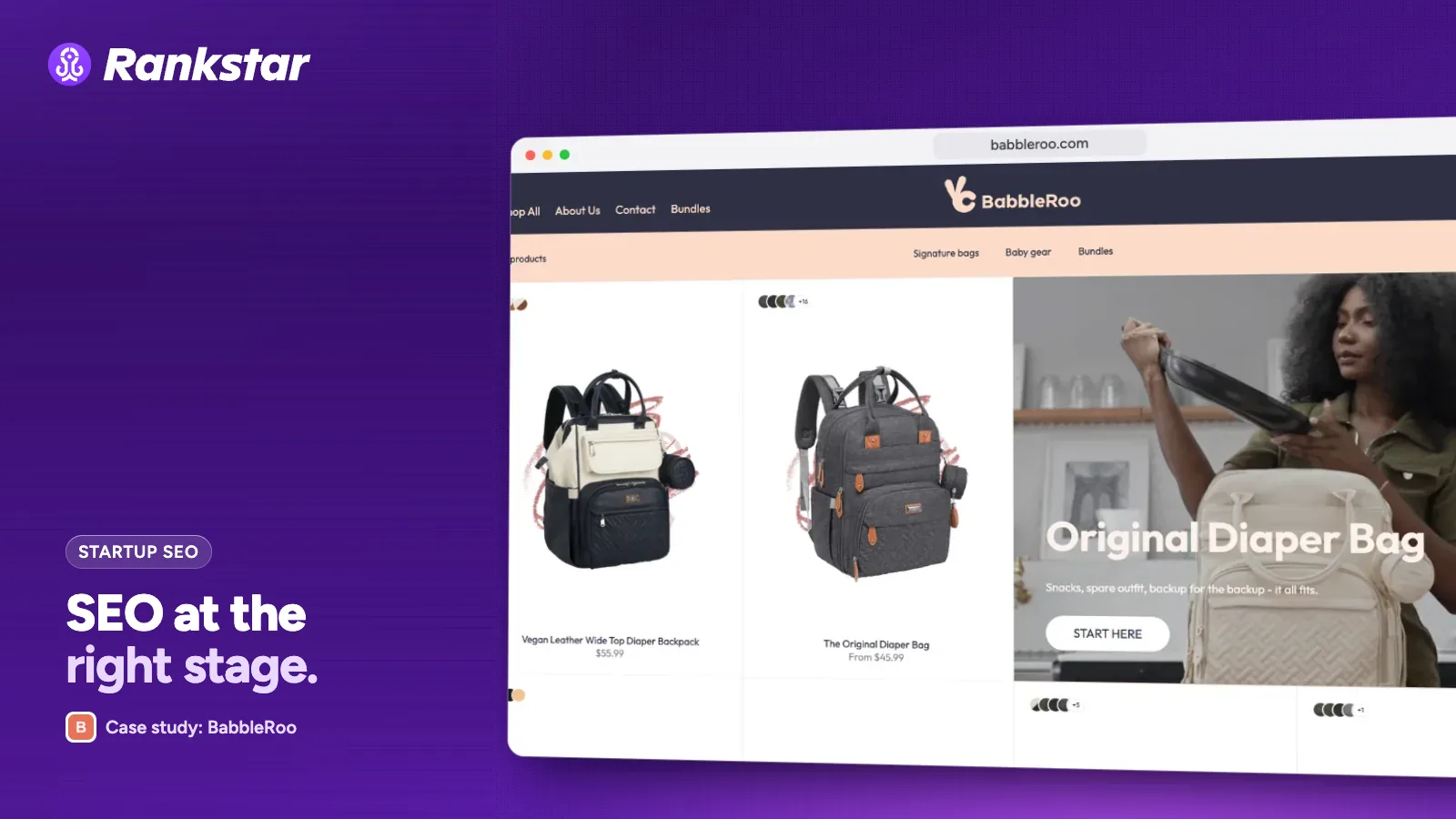
Proof from the field: see how we worked with BabbleRoo in our case study.
Does an early-stage startup need SEO?
Yes, at the right depth for your stage. Foundations protect you from day one; bigger programs pay off once you know who buys.
| Stage | Focus | Skip for now |
|---|---|---|
| Pre-launch and pre-seed | Clean technical setup, brand search, a homepage and product page that say plainly what you do, Search Console and analytics | Large content programs, broad keywords |
| Seed, finding product-market fit | Low-competition problem and solution keywords, founder-led content, first PR and directory profiles, comparison pages against the tools you replace | Hundreds of top-of-funnel posts |
| Post-PMF, Series A | A full topical map, steady monthly content, link building and digital PR, AI citations, Autosuggest, conversion tracking by page | Nothing: this is when SEO compounds fastest |
Paid ads stop the day the budget stops. SEO keeps working after a page is published, which is why it suits a startup watching its runway. It starts slower, so set the foundations early.
The same logic applies whatever you build: consumer apps, marketplaces, fintech, D2C brands, B2B services or developer tools. Software companies past Series A will find a deeper playbook on our SaaS SEO agency page, and product brands selling online on our ecommerce SEO agency page.
Startup SEO foundations: a launch checklist
The problems we see most on startup sites, cheap to fix now and expensive later:
- Staging left indexed, or production left blocked. A "noindex" tag or a robots.txt block copied from staging to the live site keeps you out of Google entirely. An indexed staging site creates duplicates.
- A homepage that does not say what you do. "The future of work, reimagined" ranks for nothing. Put the category and the problem in the title, the H1 and the first paragraph.
- Everything on one page. A single landing page cannot rank for your features, use cases and audiences. Give each its own URL.
- Content trapped in scripts. Text that only appears after JavaScript runs, or inside images, may not be indexed reliably and is often missed by AI crawlers.
- No Search Console, no analytics, no conversion events. Set them up before launch so you have data from the first visitor.
- Domain and name changes without redirects. Startups rename and pivot. Google's site move guide recommends a URL map, permanent redirects from every old URL, and changing one thing at a time (domain first, redesign later). It also notes that 301 redirects do not lose PageRank, so a careful move keeps the authority you have built.
If you are building or rebuilding the site, our SEO web design service builds these foundations in from the start. For an existing site, month 1 of every plan includes a full technical SEO audit with a prioritized fix list. For the basics, read Google's SEO Starter Guide.
Keyword strategy when you have no authority yet
A new domain will not rank for "project management software" this year. It can rank for "project management for architecture firms with fewer than 20 people". Your advantage is focus on a narrow audience.
Start with brand and defensive SEO
Make sure you own the results for your own name: "[brand]", "[brand] reviews", "[brand] pricing", "[brand] login". If your name is a common word or shared with another company, this takes deliberate work: consistent naming, a clear About page, and profiles on the sites that describe startups (Crunchbase, LinkedIn, Wellfound, Product Hunt).
Target low-volume, high-intent searches
Keyword tools often show zero or 10 searches a month for exactly the phrases your best customers use. Those phrases convert, and nobody else targets them.
We look for problem and solution searches with low competition, then build pages that answer them better than anything ranking today. Our guide to low-competition keywords explains the method.
Mine your sales calls and support inbox
Customers' own words beat tool suggestions. We turn recurring questions from call notes and support tickets into pages.
Go after the tools you replace
"[incumbent] alternatives" and "[incumbent] vs [your brand]" searches come from people already unhappy with the market leader. A fair, specific comparison page is often the first page on a startup site to bring paying users.
Plan the map, not just the next post
Month 1 of every plan produces keyword research and a topical map: the full set of pages you need, grouped by topic and ordered by what you can win first.
Content and authority that compound
Content built on what only you know
- Use what only you know. Your founders' experience, your customer interviews, the data your product collects. Original insight is what gets cited and linked; rewritten top-10 articles are not.
- Show the product solving the problem. A guide that walks through the workflow in your tool converts readers; a generic guide does not.
- Answer the question in the first lines. Readers, Google snippets and AI assistants all reward pages that give the direct answer first and the detail after.
- Update instead of only adding. As you pivot and ship, rewrite pages to match the product. Ten accurate pages beat fifty outdated ones.
Each month our native US, UK or French writers deliver 1,000+ word pieces planned from your topical map: landing pages, comparisons, guides and blog posts. We write, you review and publish; the founder approves instead of drafting.
Building authority from zero
A new domain has no links, and links still matter for rankings.
- Launches and funding news. A product launch or a funding round is a news hook. We turn it into coverage in startup, tech and industry media through digital PR, rather than one press release nobody reads.
- Founder expertise. Guest articles, podcast appearances and expert quotes in trade publications build authority for the domain and the founder at the same time.
- Data stories. A small survey or anonymized product data on a question journalists care about can earn links for years.
- Profiles that matter. Crunchbase, Product Hunt, relevant startup directories, accelerator portfolio pages and partner listings. They will not move rankings alone, but they confirm who you are to search engines and AI systems.
- Partners and customers. Partner directories, investor and accelerator portfolio pages, and customer case studies are easy links to ask for.
- Hand-picked placements. Guest posts and niche edits on relevant, real sites, chosen one by one. Never bulk link packages: a penalty is the last thing a young domain needs.
Startup SEO by business model
Marketplaces and platforms
Marketplaces can scale through category and location pages ("dog walkers in Austin") built from their own listings. Avoid publishing near-empty pages before supply exists. We plan which combinations have enough listings and unique content to deserve indexing, and keep the rest out of the index until they do.
Consumer apps
Apps compete in two search engines: Google and the app stores. A web page for each core use case, linked to the store listing, captures searches that app store optimization alone misses and gives AI assistants something to cite.
Fintech and health startups
Topics that affect money or health get extra scrutiny for accuracy and expertise. Named experts, clear sourcing and reviewed claims matter more here than anywhere else, and regulated claims need sign-off from your compliance or legal team before publishing.
B2B and sales-led startups
Small audiences, high deal values. Fewer pages, each aimed at a specific buyer problem, plus comparison pages and founder-led thought leadership, usually beat a high-volume blog.
AI answers and Autosuggest for a brand nobody knows yet
When people ask ChatGPT, Gemini, Perplexity or Google AI Overviews "what is the best tool for X", the answer names a handful of companies. AEO (answer engine optimization) and GEO (generative engine optimization) are the work of getting cited there.
Google says that AI Overviews and AI Mode have no special technical requirements: a page has to be indexed and eligible to show with a snippet, and normal SEO best practices apply. The difference for startups is that AI systems need to know you exist and what you do. That comes from three things:
- A clear, consistent identity. The same name, one-line description, category and founders on your site, LinkedIn, Crunchbase and every profile.
- Mentions in the sources AI cites. "Best of" listicles, reviews and roundups for your category. Our AI brand mentions work places your startup in those articles.
- Answers to real questions. Pages and Quora answers that respond directly to what your users ask, in words an assistant can quote.
AI answers draw on several related searches, so answer the follow-ups on your site: pricing model, who it is for, integrations.
Google Autosuggest: be suggested before you are searched
Most startup SEO guides skip the dropdown Google and Bing show as people type. If someone types "expense tracking app for" and your brand appears in the suggestions, you get attention you could not yet earn in the results. From the Essential plan up, our Autosuggest keywords service helps get your brand suggested for the category searches that matter, and your dashboard reports the traffic it brings.
How startup SEO works with Rankstar
Our SEO, AEO and GEO packages start this week, without a long onboarding.
- A 5-minute brief right after checkout: what you sell, to whom, your competitors and your stage.
- Month 1: technical audit, keyword research and a topical map, so you know exactly what to fix and what to publish first.
- Every month: 1,000+ word content for you to publish, plus off-site placements: PR, guest posts, niche edits, AI citations in listicles and reviews, and Quora answers.
- Fast delivery: each month's work within 28 days, or 14 days with express delivery when a launch is coming.
- Clear reporting: a dashboard updated monthly with rankings, AI visitors and Autosuggest traffic from your own Google Analytics and Search Console, easy to drop into an investor update.
What we need from you
Analytics and Search Console access, a short monthly fact check from a founder, and someone to publish.
Metrics worth putting in an investor update
Early on, track leading indicators: impressions and clicks on non-brand searches, the number of target keywords ranking, and AI-referred visitors. As traffic grows, add signups, demos or sales by landing page, and the share of new customers who found you through organic search or AI answers.
Plans run monthly or prepaid for 3 or 12 months, so you can match the commitment to your runway. Most of our clients see more AI and search visitors in their first month. Competitive terms take longer.
Plans for startups
Monthly SEO, AEO and GEO with a dedicated consultant, monthly or prepaid for 3 or 12 months to fit your runway.
-
Launch
- 1 × Technical audit
- 1 × Keyword research
- 1 × Topical map
- On-site SEO / AEO / GEO
- 10 focus SEO / AEO / GEO keywords
- 2 × HQ content (1,000+ words)
1 off-site placement
- 1 × HQ link
- White-label report
- Tracking dashboard, updated monthly
- Dedicated consultant
-
🔥 Popular
Essential
- 1 × Technical audit
- 1 × Keyword research
- 1 × Topical map
- On-site SEO / AEO / GEO
- 20 focus SEO / AEO / GEO keywords
- 5 × HQ content (1,000+ words)
2 off-site placements
- 1 × HQ link
- 1 × AI citation (listicle)
- 1 × Autosuggest keyword
- White-label report
- Tracking dashboard, updated monthly
- Dedicated consultant
-
Growth
- 1 × Technical audit
- 1 × Keyword research
- 1 × Topical map
- On-site SEO / AEO / GEO
- 50 focus SEO / AEO / GEO keywords
- 10 × HQ content (1,000+ words)
4 off-site placements
- 2 × HQ links
- 1 × AI citation (listicle)
- 1 × AI citation (review)
- 2 × Autosuggest keywords
- White-label report
- Tracking dashboard, updated monthly
- Dedicated consultant
-
Pro
- 1 × Technical audit
- 1 × Keyword research
- 1 × Topical map
- On-site SEO / AEO / GEO
- 150 focus SEO / AEO / GEO keywords
- 20 × HQ content (1,000+ words)
7 off-site placements
- 3 × HQ links
- 2 × AI citations (listicle)
- 2 × AI citations (review)
- 8 × Autosuggest keywords
- Google AI Overviews secret sauce
- White-label report
- Tracking dashboard, updated monthly
- Dedicated consultant
-
Authority
- 1 × Technical audit
- 1 × Keyword research
- 1 × Topical map
- On-site SEO / AEO / GEO
- 250 focus SEO / AEO / GEO keywords
- 30 × HQ content (1,000+ words)
20 off-site placements
- 4 × HQ links
- 3 × AI citations (listicle)
- 3 × AI citations (review)
- 10 × Quora answers
- 10 × Autosuggest keywords
- Google AI Overviews secret sauce
- White-label report
- Tracking dashboard, updated monthly
- Dedicated consultant
DIY, freelancer or startup SEO agency?
A technical founder can handle the foundations. Steady content, links and AI citations take time founders lack. A freelancer or startup SEO consultant usually covers one skill; an agency covers all of them with one accountable contact.
Whoever you hire, ask:
- What would you do first for a site at our stage? A good answer starts with foundations and winnable keywords, not a 100-post content calendar.
- How do you handle low authority? Listen for long-tail targeting, PR hooks and comparison pages.
- Where do links come from? Ask for examples. Bulk link packages are a warning sign.
- How do you cover AI answers and Autosuggest? They matter most for brands that do not rank yet; an agency that ignores them is behind.
- What will we see each month? Rankings, visitors and conversions from your own data, in a format you can share with your board.
Read more on what to expect from an SEO agency for startups, and if you are building an app, see our notes on SEO for mobile app developers.
Startup SEO mistakes to avoid
- Waiting until after the Series A. Domains and content take time to gain trust. Starting late means paying for ads longer.
- Publishing for volume. Dozens of thin posts that say what every competitor says. They do not rank, and they make the site look generic to buyers.
- Rebranding without a redirect plan. A new name and domain can erase the visibility you built in a day.
- Ignoring the brand search. If your name is not the top result for your name, investors, journalists and customers notice.
- Measuring only traffic. Track signups, demos or sales by landing page from the start, so you know which pages pay for themselves.
Startup SEO: FAQ
Should we invest in SEO as an early-stage startup?
Yes, at the right depth. Technical foundations, brand search and a few pages for winnable keywords cost little and start building authority from day one. Larger content and link programs make most sense once you know your audience, usually around product-market fit.
How long does SEO take for a startup?
New domains usually see low-competition and brand searches move first, while competitive terms take months longer because authority builds over time. Most startups should plan SEO over several quarters and track progress monthly with rankings, visitors and conversions by page.
What is the best SEO strategy for a startup?
Fix the technical basics, own your brand search, target low-competition problem and comparison keywords, publish content built on what only you know, and earn links from launches, founder expertise and PR. Then add AI citations and Autosuggest to get named before you rank for big terms.
Is SEO better than paid ads for startups?
They do different jobs. Paid ads bring traffic immediately but stop when spending stops. SEO is slower to start but keeps working after pages are published. Many startups use ads to test messaging and keywords, then invest in SEO for the terms that convert.
Can a startup get cited in ChatGPT or AI Overviews?
Yes. AI systems cite pages that answer questions clearly and companies mentioned in trusted listicles, reviews and roundups. A consistent identity across your site and profiles helps them understand who you are. Our AI brand mentions service places startups in those sources.
What does a startup SEO agency do?
A startup SEO agency sets up technical foundations, researches winnable keywords, plans and writes content, and builds authority through PR and links. Ours also covers AI citations, Quora answers and Google Autosuggest. See our SEO, AEO and GEO packages for what each plan includes.
Will changing our startup's name or domain hurt SEO?
It can, if done without a plan. Map every old URL to a new one, use permanent 301 redirects, update profiles and links, and avoid redesigning the site at the same time. Done carefully, a domain move keeps most of the visibility you have built.
Do you only work with tech startups?
No. We work with startups in software, consumer apps, marketplaces, fintech, D2C ecommerce and services. Software companies at a later stage can see our SaaS SEO agency page, which covers comparison pages, docs and product-led content in more depth.








Start compounding before your competitors do
Get the foundations right, win the searches you can win today, and get your startup named in AI answers. Pick a plan, send a 5-minute brief, and your consultant starts with an audit, keyword research and a topical map.